An Australian school for
future citizens of the world
Sydney Japanese International School
Guide your child to their full potential with an immersive bilingual education in an environment of honesty, respect and generosity
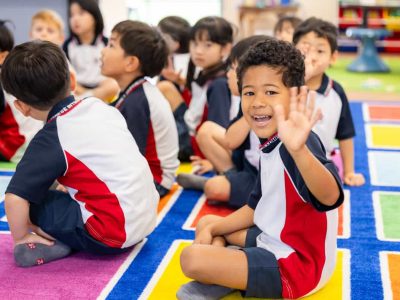
The International Division of SJIS is a Kindergarten to Year 6 (K-6) school for local Australian and expatriate children. Welcoming students from all languages and cultures, we teach the NSW curriculum while immersing students in the Japanese language and culture. Is your vision for your child to be a bilingual global citizen who can move easily between cultures? If it is, we invite you to schedule your tour now.
Small classes that prepare students for a big life
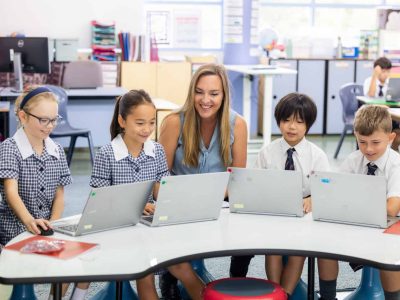
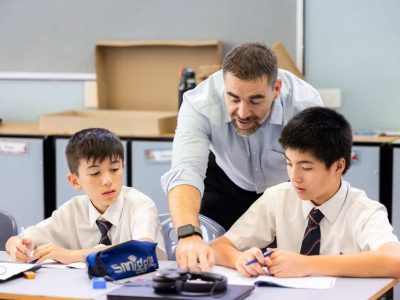
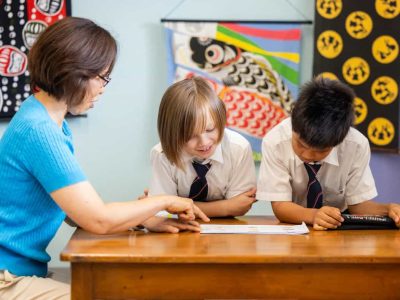
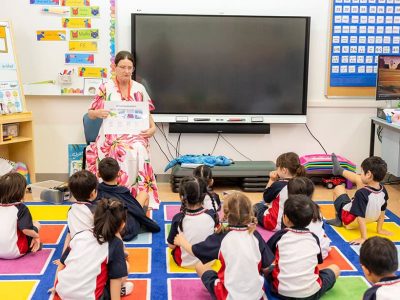
Our small class sizes give teachers the time to see your child fully, from the big things — like writing an individual program to bring out your child’s full potential — to the little things — like making sure every child takes time to eat properly.
In the International Division, your child will study the NSW K-6 Curriculum in English. Your child will also have a daily lesson in Japanese and weekly bilingual classes in PE, art, music, and ICT. Bilingual classes are taught by an Australian and a Japanese teacher working together.
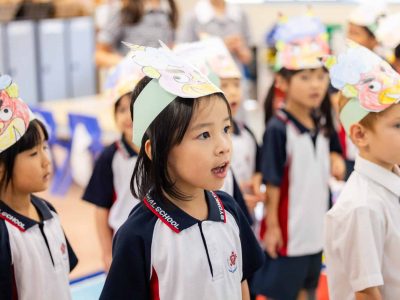
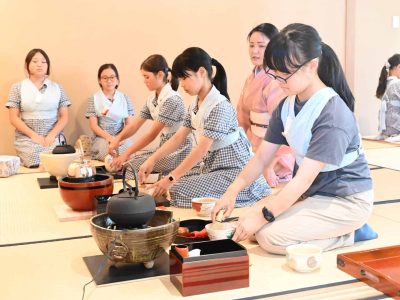
Throughout the year, your child will study and enjoy Japanese festivals, ceremonies, cooking and music.
By choosing SJIS, you teach your child that their world has wide horizons.
Integrated language learning
Your child won’t have Japanese lessons in the traditional sense. Instead, your child will learn new material in Japanese. We do this by incorporating elements of the Content and Language Integrated Learning Method (CLIL) when designing lessons.
This means your child is learning two things at once, which is more fun and interesting than rote learning grammar. Following the principles of CLIL also teaches children to be better thinkers.
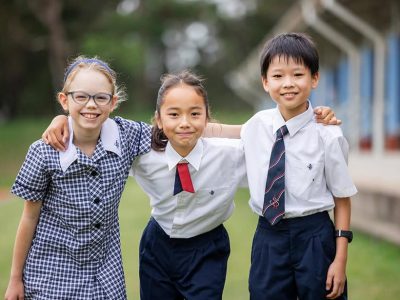
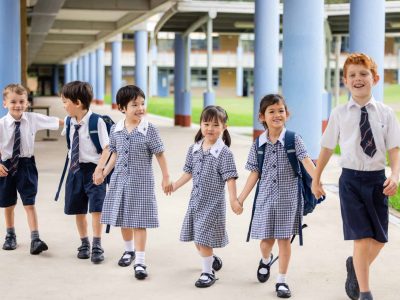
The International Division welcomes students from all language and cultural backgrounds.
If your child doesn’t speak any Japanese, we will build their skills from first words to fluency. Parents are often amazed by how soon we send home videos of their children presenting confidently in Japanese to their classmates.
We also welcome children for whom English is not the first language spoken at home. For those students, we have in-class language support and one-onone attention or small-group intervention from specialist teachers.
Set in peaceful surroundings, SJIS is a gentle environment where students have the freedom to explore their identity and place in the world while learning an additional language. The additional language is just the most obvious benefit of a bilingual education.
Research shows the positive effects of bilingual education on executive functioning, the ability to focus, make good choices, and switch between concepts and tasks.
Additionally, bilingual children have been shown to understand other points of view better and communicate effectively in diverse settings.
As you might expect, bilingual children learn how language works, making it easier for them to add even more languages later.
How your child will learn
Your child’s day will be made up of six 45-minute lessons that follow the curriculum laid down by the New South Wales Education Standards Authority (NESA). NESA’s key learning areas for primary school students are:
English
Mathematics
Science and technology
Human society and its environment (HSIE)
Creative arts
Personal development, health and physical education (PDHPE)
These lessons are taught in English while leaving time every day for lessons in Japanese, so your child is always building their language skills.
Opportunities to excel, support to succeed
Every child has unique potential. For students who excel, our new enrichment program encourages creativity, critical thinking, and independent exploration.
For students needing extra support, we offer personalised programs led by qualified teachers, using evidence-based methods like MultiLit. With the help of our dedicated teacher’s aides, we ensure every child receives the guidance they need to thrive.
A place for parents
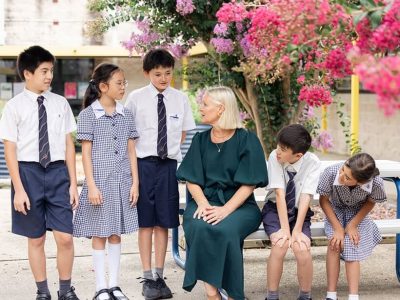
Being a small school, all our teachers know all our students. We want to know our parents just as well. That’s why our school newsletter is called Kakehashi. It means building bridges — a bridge between school and home.
We want to educate your child with you.
You’ll always be in touch with your child’s education because your child’s teachers are active communicators — through the school app, Seesaw, Google Classroom and by email. Teachers are also readily available to meet with you or to talk by phone or email.
Parents have opportunities (but no obligations) to volunteer for class activities, be a class parent, join our active Parent Teacher Association (PTA), or help with events, reading groups, cooking lessons and tea ceremonies.
We do not offer before-school or after-school care. However, a teacher is on duty before school so that students can be dropped off from 8 am. There is also something exciting for students to do every day after school. Afterschool activities are run on school grounds by external providers and teachers.
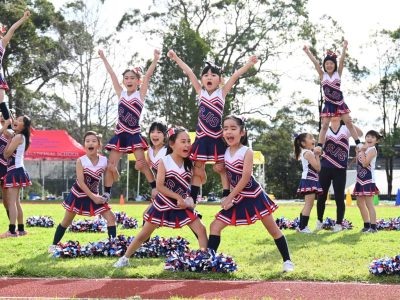
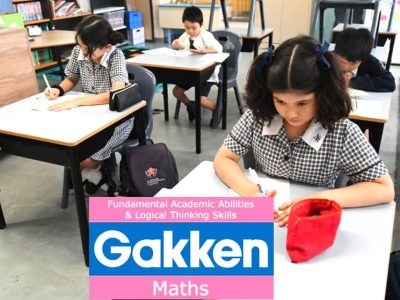
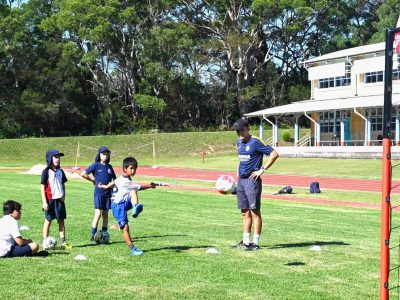
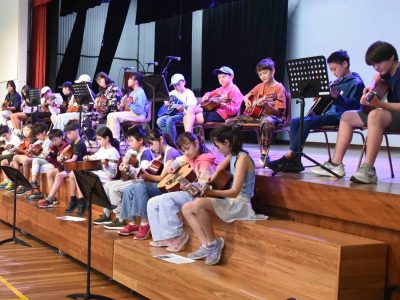
Our wide range of after-school activities includes sports, music and academic skills.
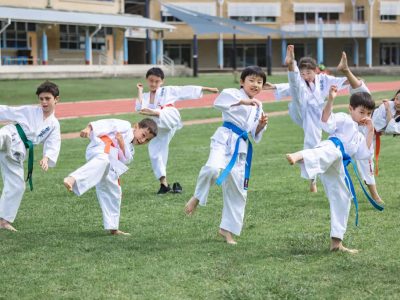
Some of the activities have been selected to extend your child’s cultural immersion. There are opportunities after school to practise karate or join our sado (Japanese tea ceremony) circle. Both activities develop mindfulness, manners and sensitivity.
Transport
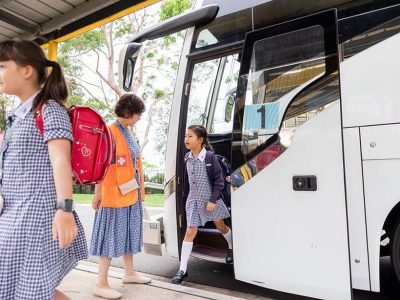
Our students come mainly from the North Shore, the Northern Beaches and
some Western Suburbs. They are picked up in the morning and returned by
our convenient bus network.
Students enjoying after-school activities must be picked up from the school
as there is no second bus service in the afternoons.
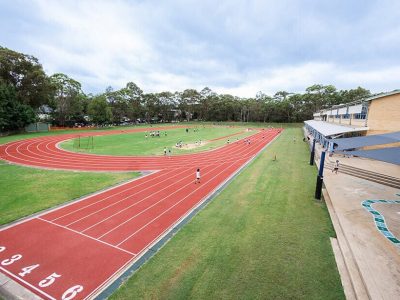
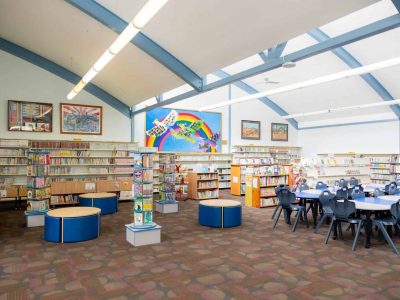
SJIS is a calm, respectful and caring school in one of the most beautiful parts of Sydney, Terrey Hills. Our community brings together students and parents from Australia, Japan and many other countries. By choosing our International Division, you will give your child all the opportunities that flow from becoming a bilingual citizen of the world.
We invite you to visit us for a tour and experience the school’s culture, atmosphere, and potential for yourself. Come and see what the future could hold for your young global citizen.
A The International Division welcomes everyone. SJIS is open to all families, whether you’re Japanese, Australian, or from any other cultural background.
Q Does my child need to speak Japanese?
A Not at all. The International Division welcomes students who have never spoken Japanese, and we have the teachers, resources, and experience to help those students quickly build their Japanese language skills.
Q Does my child need to be fluent in English?
A If English is not the first language spoken at home, our specialist EAL/D teacher will support your child one-on-one in small group settings and work with them in class.
Q Are the Japanese and International Divisions separate?
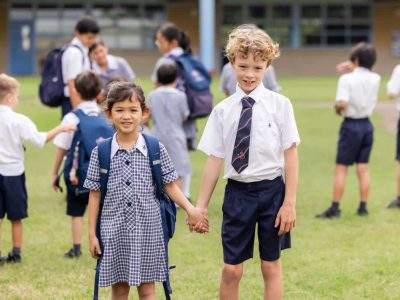
A Children in the two divisions are taught separately for most subjects, as the divisions follow different curricula. However, students from both divisions come together for joint lessons in ICT, PE, Art, and Music, as well as during lunchtime and other school activities. As a result, your child will almost certainly have friends in both divisions.
Q Do you teach the NSW curriculum differently from other NSW schools?
A Your child will learn the NSW curriculum in English, exactly as they would at any school in NSW. Most likely, you’ll find our class sizes are smaller than in other schools, meaning your child will get more individual attention. Additionally, your child will enjoy visual arts, music, PE and ICT classes during the school term. These classes are taught bilingually, with two teachers working as a team.
Q How will my child’s progress be assessed?
A Your child will be assessed against the outcomes laid down by NESA for the NSW curriculum. Regular progress reports and parent-teacher meetings ensure you are kept informed of your child’s development in all subjects. We also participate in the National Assessment Programs – Literacy, Numeracy (NAPLAN) in March each year for Year 3 and Year 5 along with great summative assessments throughout the year.
Q Do you have a secondary school?
A For now, SJIS offers only primary education for our International Division students. Our students go on to thrive at private and public schools all over Sydney. Many of our students benefit from being bilingual by electing to study Japanese in high school or because being bilingual makes it easier to learn additional languages. In addition, learning in two languages teaches perseverance and respect across cultures — values that travel well to high school and beyond.
What our parents say about us
“Everybody’s very friendly and knows each other. It’s very welcoming. I want my children to have space, but also I want to watch them grow and be involved in the process, and the school supports that.”
“This is the kind of school that broadens children’s horizons.”
— Kindergarten Parent —
“The teachers are so friendly—they really care about the kids. The staff and teachers take time to listen to us and the kids, and they’re happy to do it.”
“We went to Japan and my daughter spoke fluently to the people we met.”
— Parent of an alumni —
“My children have only been at the school for just under a year and they’re fluently speaking Japanese, which I find just remarkable. The teaching is at another level and they teach in such a calm way.”
“One reason we chose SJIS was the deep level of respect, which you can see first of all in the beautiful grounds, which are serene and immaculate. My children are learning to be inclusive of everybody and to respect different cultures and views.”
SJIS International Division | Bilingual Education in Sydney
Barac, R., & Bialystok, E. (2012). Cognitive development of bilingual children. Language
Teaching, 45(2), 219-229. Also, Marian, V., Shook, A., & Schroeder, S. R. (2013). Bilingualism: Consequences for language, cognition, development, and the brain. The Journal of Communication Disorders, 46(4), 284-302.
Marian, V., Shook, A., & Schroeder, S. R. (2013). Bilingualism: Consequences for language, cognition, development, and the brain. The Journal of Communication Disorders, 46(4), 284-302.
Barac, R., & Bialystok, E. (2012). Cognitive development of bilingual children. Language
Teaching, 45(2), 219-229. Also, Marian, V., Shook, A., & Schroeder, S. R. (2013). Bilingualism: Consequences for language, cognition, development, and the brain. The Journal of Communication Disorders, 46(4), 284-302.